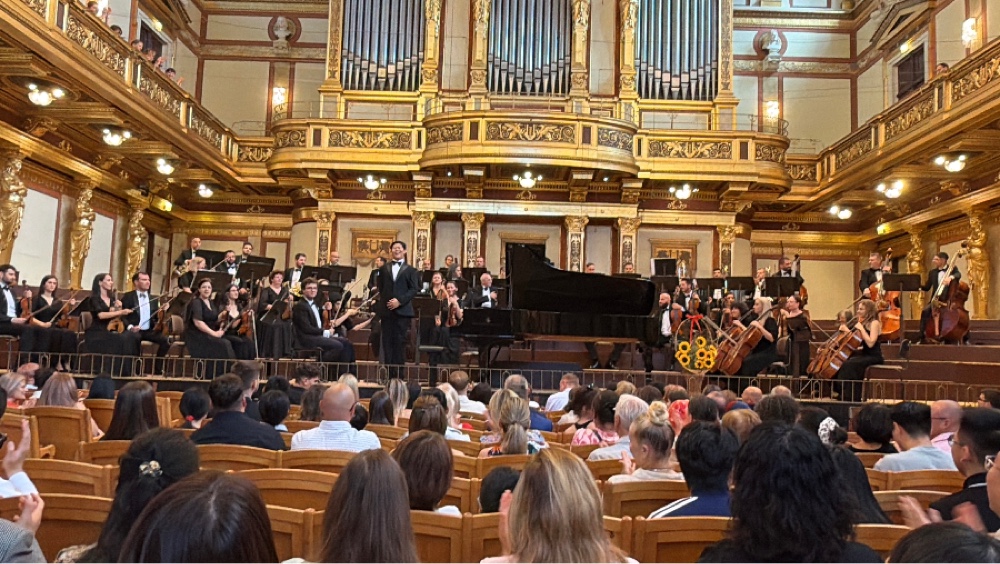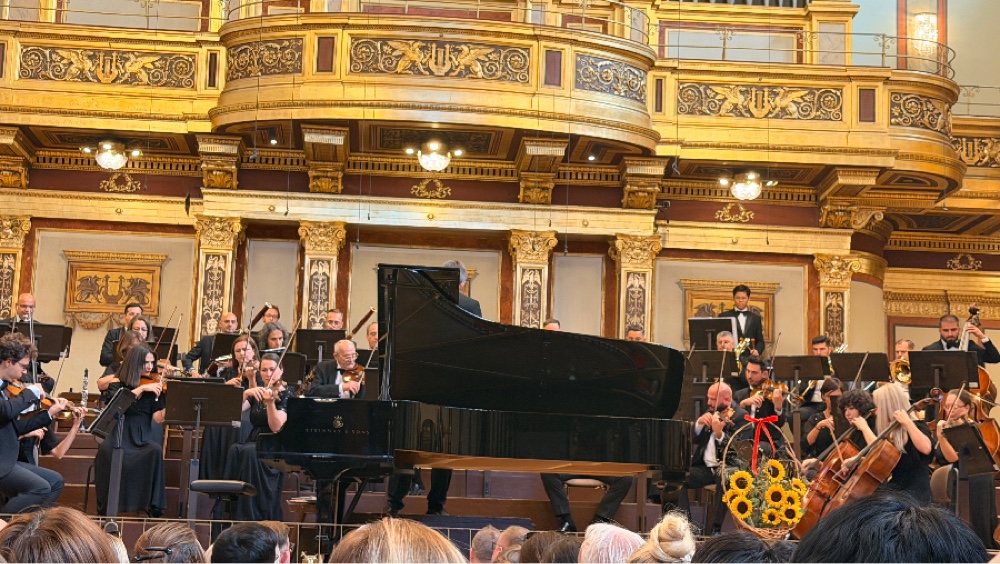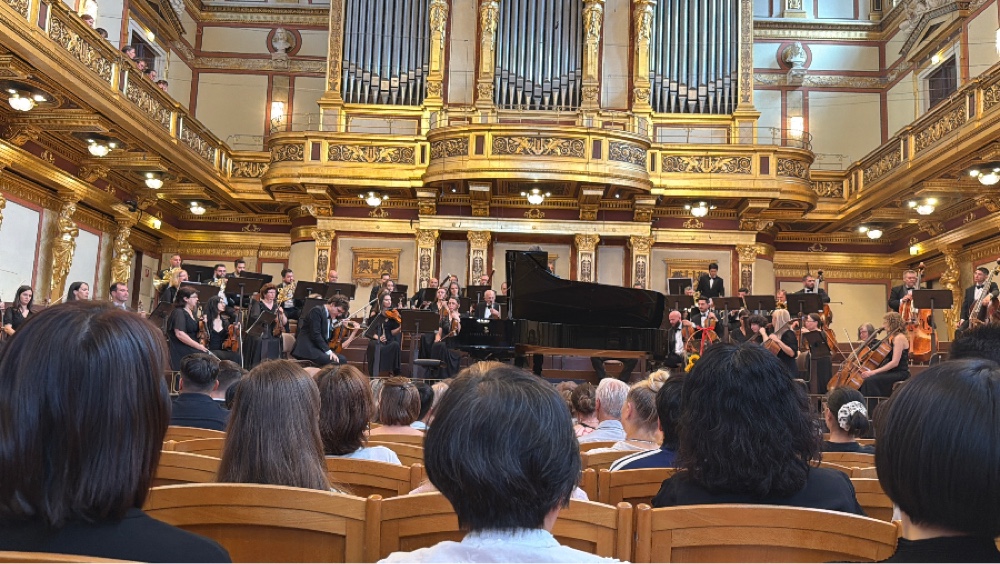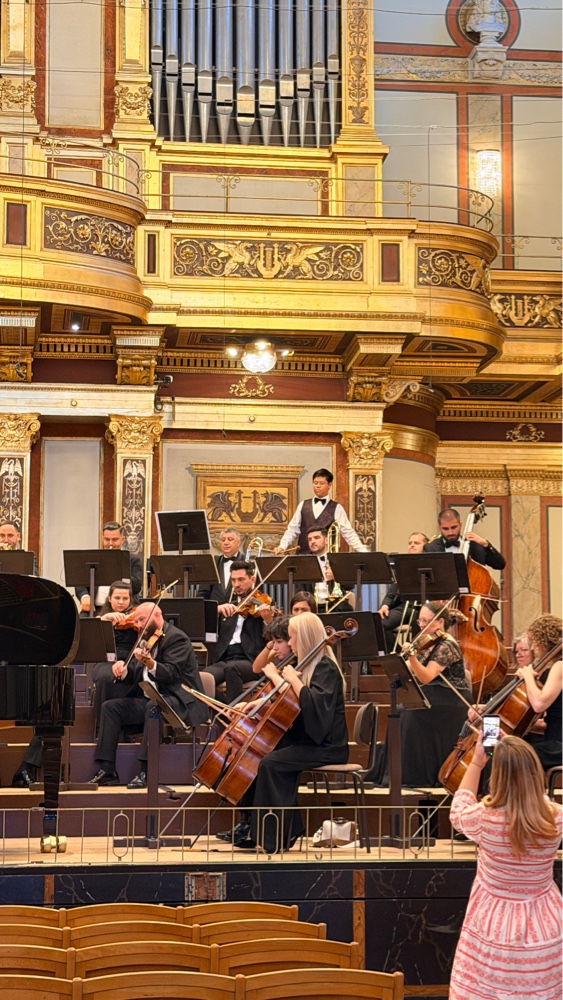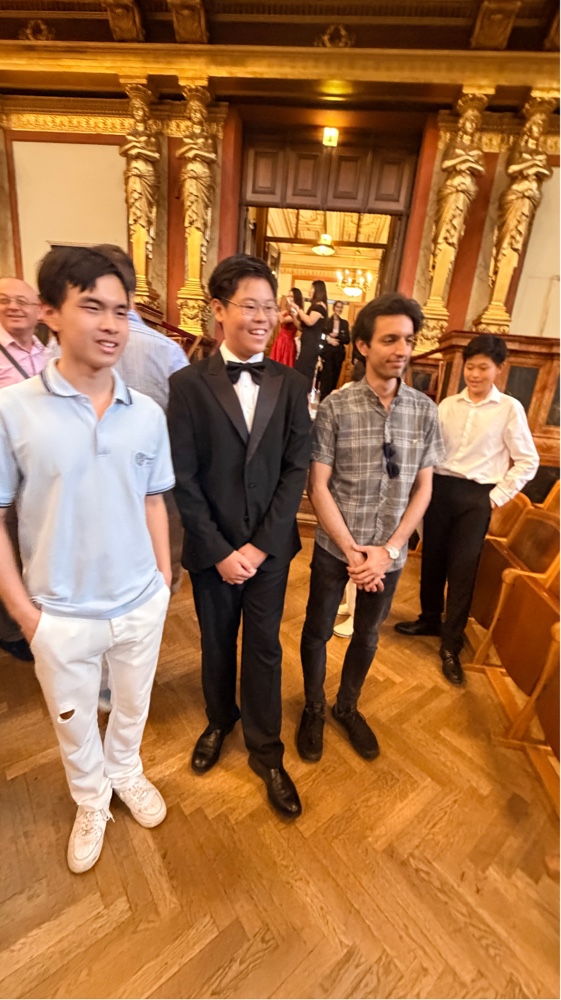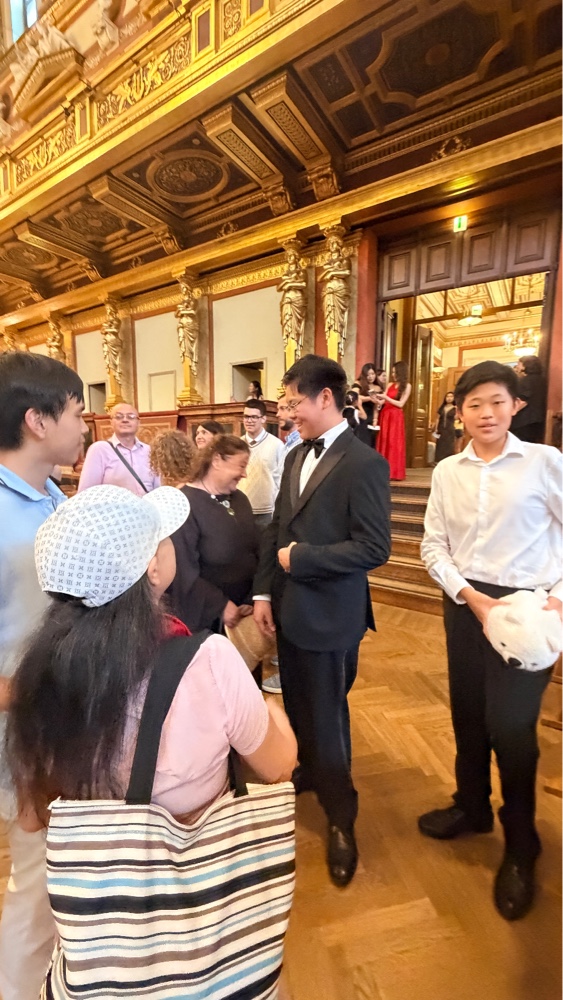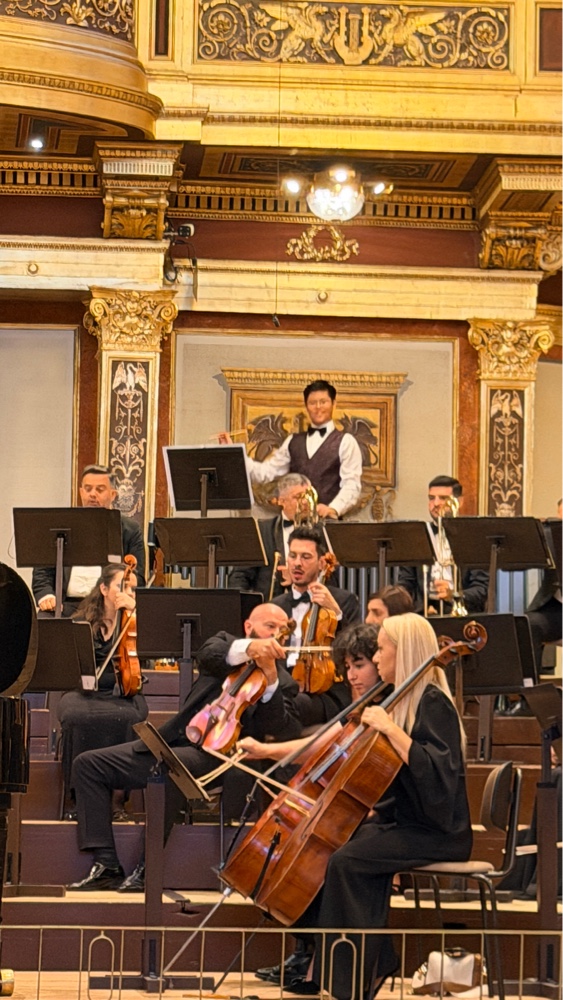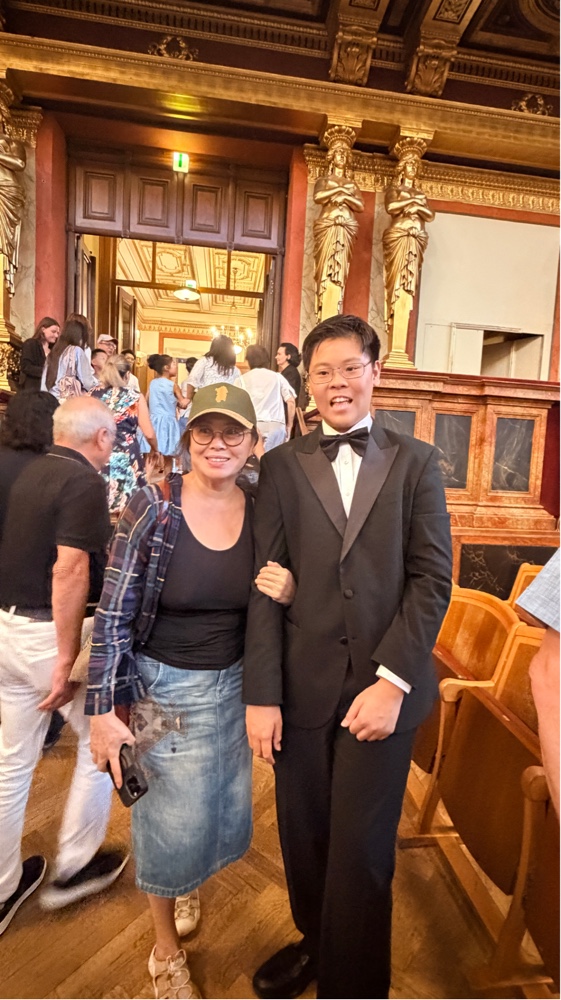




On 15 August 2026, composer Carey Tan returned to the Golden Hall of the Musikverein in Vienna, performing his original Symphony No. 2, The Cries of War, with the Arad Philharmonic Orchestra under conductor Martin Braun. Carey presented the work not only as its composer, but also joined the orchestra himself on marimba, taking part directly in bringing the symphony from the score to the concert stage.
This was Carey’s second appearance at the Golden Hall. In August 2025, he appeared there as both composer and piano soloist for the world premiere of his Piano Concerto No. 1, The Explorers, a three-movement work inspired by the ocean, the desert and Mars, and by humanity’s curiosity, courage and desire to explore the unknown. One year later, he returned to the same hall with a very different work: The Cries of War.
Carey completed The Cries of War at the age of 11. Rather than depicting one particular war, the symphony focuses on the human experiences that wars have in common: fear, loss, destruction, memory and the longing for peace. It asks whether, after experiencing suffering and devastation, humanity can learn to reflect, understand one another and choose a different path.
The symphony has three movements: Shadows of Misery, The Reflection and The Pact. The music begins with oppression, instability and conflict, moves gradually towards reflection, and finally searches for the possibility of understanding and reconciliation.
In the third movement, The Pact, Carey imagines the orchestra almost as a vast international conference hall. Different instruments become different voices around a negotiating table: interrupting one another, arguing, responding, falling silent, reconsidering and eventually compromising. Through these musical “characters”, conflict gradually begins to move towards the possibility of agreement.
This reflects Carey’s wider approach to symphonic composition. For him, an orchestra is not simply a large group of instruments producing sound. Each instrument can have its own personality, almost like a character in a drama. The composer may create the starting point of a story, but cannot decide exactly what every listener will see or feel. Once music enters another person’s inner world, it begins to connect with that person’s own memories, emotions and experiences.
During 2026, The Cries of War travelled through several different countries and concert halls. On 21 June, it was performed at the Royal College of Music in London with the London City Philharmonic. On 24 July, it was presented at the Central Opera House Theatre in Beijing with the Central Opera House Symphony Orchestra, with the concert also reaching millions of viewers through an online broadcast. In August, the work continued its European journey before reaching the Golden Hall in Vienna.
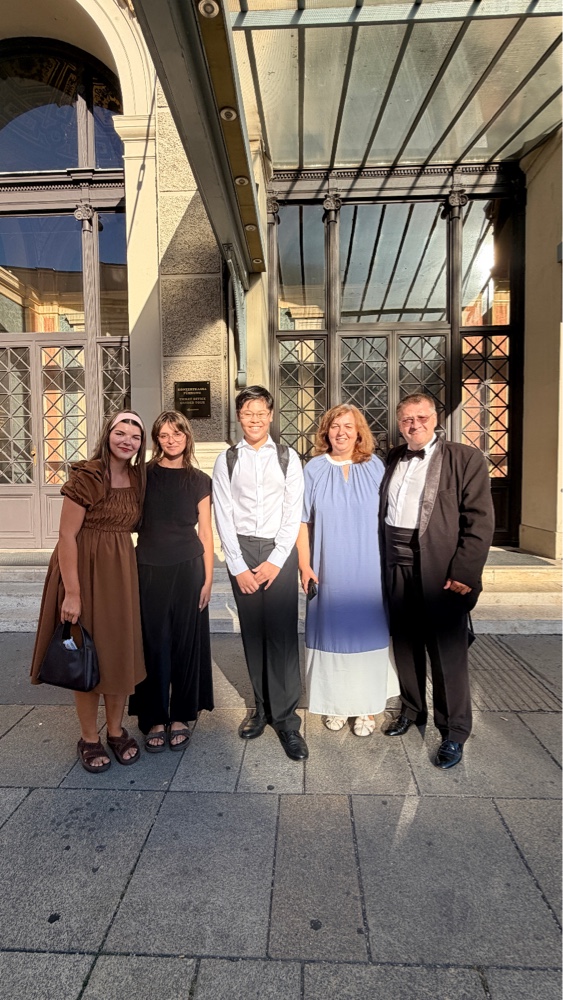
One of the most memorable moments came after the Vienna performance. A family who had heard Carey perform The Explorers at the same venue in 2025 waited outside the Golden Hall for nearly an hour to meet him again. A year earlier, they had connected with the excitement, adventure and sense of the unknown in The Explorers. This time, The Cries of War affected them in a completely different way, through its portrayal of suffering, loss and the hope for peace.
For Carey, moments like this represent something essential about music. The same composer, in the same concert hall, can create completely different emotional worlds, and the meaning of a piece does not exist only in the score. It also exists in the experiences that each listener brings to it.
From the curiosity and adventure of The Explorers, to the reflections on war and peace in The Cries of War; from the questions about technology and civilisation in his Third Symphony, The Rise and Fall of AI Humanity, to the exploration of time and existence in his Fourth Symphony, Journey Through the Universe; and from the search for nature, the soul and Truth in his Fifth Symphony, Seven Doors to Eternity, to his latest Sixth Symphony, Ascension, Carey’s music has continued to move both outward into the world and inward into human experience.
Whether he is writing about war, artificial intelligence, the universe, nature or the spiritual world, Carey hopes to create symphonic music that tells a story people can hear, imagine and feel, regardless of whether they have any formal knowledge of classical music.
For him, music does not need to give everyone the same answer. What matters is that, at a certain moment, it can truly reach another person.